If you want to sell on Amazon in Pennsylvania, the Amazon side is the same as anywhere in the U.S. What changes is the paperwork around it. Pennsylvania now requires a yearly report from every LLC, it changed how Philadelphia and Allegheny County local sales tax works in 2026, and it exempts most everyday clothing from sales tax. This guide walks Pennsylvania sellers through each of those rules in plain English, then shows how to set up Seller Central, what it costs, and the mistakes to avoid.
Quick Answer
To start selling on Amazon as a Pennsylvania business, most beginners form an LLC with the Pennsylvania Department of State ($125 Certificate of Organization), get a free EIN from the IRS, and open an Amazon Professional selling account ($39.99 per month). Amazon collects and remits Pennsylvania sales tax on orders it facilitates, so a free state sales tax license is mainly needed if you also sell directly (your own website, markets, wholesale) or want to buy inventory tax-free for resale. Budget for the $7 annual report due by September 30 each year, and if you operate in Philadelphia, a free Commercial Activity License plus a yearly city tax return.
In this guide
- Set up your Pennsylvania business
- Pennsylvania sales tax for Amazon sellers
- Philadelphia and local rules
- Open and set up Seller Central
- Startup and ongoing costs
- Worked example: one sale, three addresses
- Common mistakes
- Tips for Pennsylvania sellers
- FAQ
Set Up Your Pennsylvania Business
Amazon lets individuals sell, but most Pennsylvania sellers who plan to grow choose an LLC. It separates business and personal finances and makes banking, supplier accounts and brand registration cleaner later on.
Form an LLC with the Department of State
In Pennsylvania, an LLC is created by filing a Certificate of Organization (form DSCB:15-8821) together with a docketing statement with the Bureau of Corporations and Charitable Organizations. You can file online through the state’s Business Filing Services portal. According to the Department of State fee schedule, the Certificate of Organization costs $125. Department fees are nonrefundable, even for rejected filings, so search your name first with the state’s business name search.
A few related Pennsylvania fees worth knowing:
- Fictitious name registration: $70. Needed if you sell under a brand name that differs from your LLC’s legal name.
- Name reservation: $70. Optional, if you want to hold a name before you file.
- Foreign registration: $250. Only if your LLC was formed in another state and you are registering it to do business in Pennsylvania.
- Veteran and reservist exemption. Pennsylvania offers a business filing fee exemption for qualifying veteran-owned and reservist-owned small businesses (Act 135 of 2016).
Calendar the new $7 annual report
Pennsylvania replaced its old once-a-decade report with an annual report starting in 2025. Every active for-profit LLC files once a year, and the fee is $7. LLC reports are due by September 30, and your first report is due in the calendar year after you form. The 2025 and 2026 reports carry a grace period, but starting with reports due in 2027, an LLC that skips the report can be administratively dissolved. Reinstatement costs $35 online plus $15 for each missed report, so this tiny filing is worth a recurring reminder.
Be cautious with mail that offers to file your annual report for $100 or more. The state fee is $7, and you can file it yourself online in minutes.
Get an EIN and understand income tax
An Employer Identification Number from the IRS is free and is what Amazon, your bank and suppliers will typically ask for. For a single-member LLC, profits generally pass through to your personal return, and Pennsylvania’s personal income tax is a flat 3.07%, a rate that has applied since 2004. Talk to a tax professional before choosing S-corporation treatment or any other election.
Pennsylvania Sales Tax for Amazon Sellers
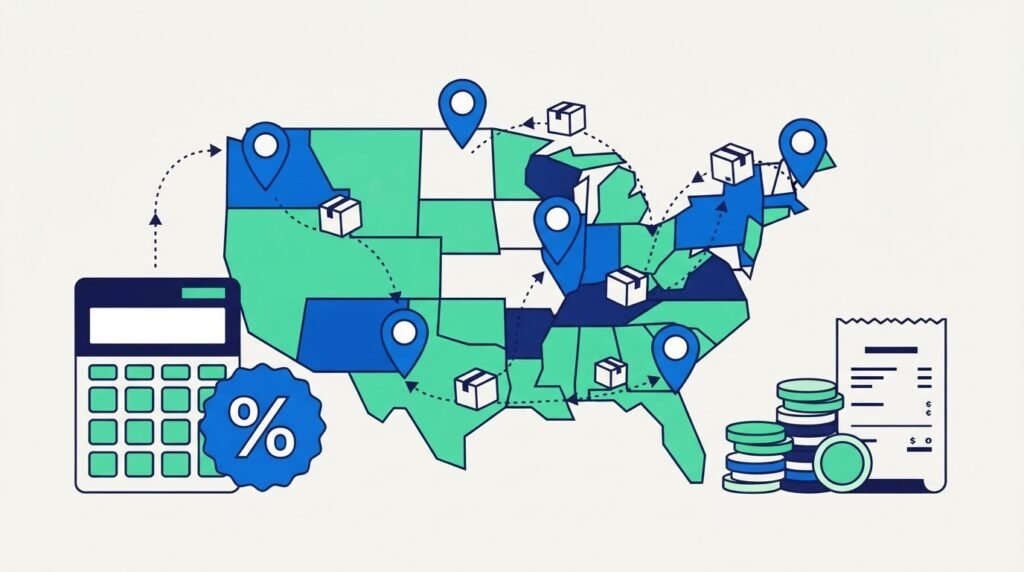
Pennsylvania’s sales tax is 6% statewide, with an extra 1% local tax in Allegheny County (7% total) and 2% in Philadelphia (8% total). No other county or city adds its own general sales tax. Here is how that works when you sell through Amazon.
What Amazon collects for you
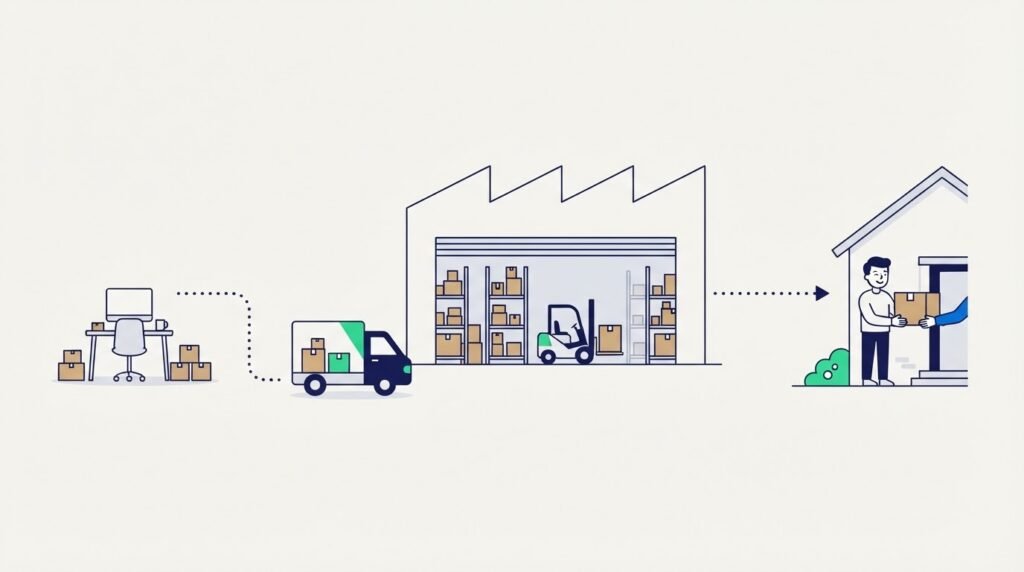
Pennsylvania treats Amazon as a marketplace facilitator: a platform that lists third-party sellers’ goods and collects payment from buyers. Under the rules explained on the Department of Revenue’s online retailers page, marketplace facilitators with economic presence in Pennsylvania must register, collect and remit Pennsylvania sales tax. In practice, that means Amazon charges the buyer the tax on taxable orders shipped to Pennsylvania addresses and sends it to the state. You do not file a Pennsylvania return for those Amazon orders.
When you still want a Pennsylvania sales tax license
The Sales, Use and Hotel Occupancy Tax License is free and is issued through the Department of Revenue’s myPATH system. A Pennsylvania-based Amazon seller usually needs one in these situations:
- You sell outside Amazon. Sales on your own website, at craft fairs or farmers markets, or to local customers are your responsibility to tax.
- You buy inventory from Pennsylvania suppliers. With a license, you can give suppliers a completed resale exemption certificate (REV-1220) so you don’t pay sales tax on goods you will resell.
- You are unsure. If you sell only on Amazon and none of the above applies, confirm your situation with the Department of Revenue (717-787-1064) rather than guessing.
If you live outside Pennsylvania and ship to Pennsylvania buyers, the state’s economic presence threshold is more than $100,000 in Pennsylvania gross sales per calendar year. A marketplace seller counts only direct sales and sales through marketplaces that do not collect the tax for it, so your Amazon sales do not count toward that threshold.
The 2026 change: local tax now follows the delivery address
Act 21 of 2026 changed how Philadelphia’s 2% and Allegheny County’s 1% local taxes apply. As the Department of Revenue explains on its local sales tax page, local tax used to depend mostly on where the seller was located. It now depends on where the product is delivered. The law was enacted on July 12, 2026, applies retroactively to tax years after December 31, 2025, and the department began enforcing it on October 1, 2026.
For Amazon orders, Amazon handles the rate. For your direct sales, a Pittsburgh-area seller shipping to Philadelphia now charges 8%, and a Philadelphia seller shipping to Harrisburg charges 6%. Make sure your website checkout uses the buyer’s delivery address, not yours.
Clothing and other Pennsylvania exemptions
Pennsylvania does not tax everyday ordinary wearing apparel. The state’s business guidance notes that items such as backpacks, jewelry and formal wear are still taxable. If you sell apparel, accessories or mixed bundles, check how each product is classified in the Department of Revenue’s Retailer’s Information Guide (REV-717) and make sure the tax setting on each Amazon listing matches what you are actually selling.
Philadelphia and Local Rules
Pennsylvania has no general state business license, but some cities have their own requirements. Philadelphia is the big one for online sellers:
- Commercial Activity License (CAL). The city says you need one to do business in Philadelphia, including businesses located outside city limits that do business there. The city’s CAL page lists no cost for the license, but you need a City tax account first.
- Business Income and Receipts Tax (BIRT). Businesses with a CAL file a BIRT return by April 15 for the previous year, even in a year without profit, and the license can be suspended if city taxes go unpaid.
Elsewhere in the state, check with your township, borough or city about local registration and earned income tax, since requirements vary by municipality. The state’s Business One-Stop Shop can build a registration checklist for your specific activity.
Not sure which of these filings apply to your setup? Book a free 30-minute consultation and we’ll map out your Pennsylvania launch checklist with you.
Open and Set Up Seller Central
Once your business basics are in place, the Amazon setup follows a clear order:
- Choose a selling plan. Amazon’s pricing page lists the Professional plan at $39.99 per month and the Individual plan at $0.99 per item sold. Amazon suggests the Individual plan if you expect to sell fewer than 40 items a month; Professional adds bulk listing tools, advertising and brand tools.
- Register with consistent details. Use the exact legal name and address shown on your Pennsylvania LLC records, plus your EIN and a business bank account. Mismatches between documents are a common cause of verification delays.
- Complete identity verification. Have your ID and business documents ready, and follow Amazon’s current instructions in Seller Central.
- Fill in the tax interview. This sets up your federal tax information. Because Amazon collects Pennsylvania sales tax on marketplace orders, you don’t need to configure Pennsylvania collection for those sales.
- Choose fulfillment. With Fulfillment by Amazon (FBA), you ship inventory to Amazon and it handles storage, shipping and returns for a fee. With merchant fulfillment, you ship orders yourself from Pennsylvania.
- Create listings and check category rules. Some categories need approval before you can list. Confirm requirements in Seller Central before ordering inventory.
If you would rather have a team handle product research, sourcing and launch, see how our Amazon micro private label service works, or compare notes with our Amazon seller guide for Illinois if you operate in more than one state.
Startup and Ongoing Costs
Here are the official fees a Pennsylvania Amazon seller is most likely to see. Product, shipping, FBA and advertising costs depend on your product and are not included.
| Item | Cost | How often |
|---|---|---|
| Pennsylvania Certificate of Organization (LLC) | $125 | One time |
| Pennsylvania annual report | $7 | Every year, by September 30 |
| Fictitious name registration (optional) | $70 | One time |
| Sales, Use and Hotel Occupancy Tax License | $0 | When needed |
| Philadelphia Commercial Activity License | $0 | Only if doing business in Philadelphia |
| EIN from the IRS | $0 | One time |
| Amazon Professional plan | $39.99 | Monthly |
| Amazon Individual plan | $0.99 per item sold | Per sale |
| Amazon referral fee | Varies by category | Per sale |
Minimum state cost to form an LLC and open a Professional account: $125 plus $39.99 for the first month, or about $165, before inventory.
Worked Example: One Sale, Three Addresses
Illustrative numbers only, not real results. Suppose a Lancaster-based seller sells a $30 kitchen gadget, a taxable item. On Amazon, the sales tax works like this:
| Buyer’s delivery address | Rate | Tax on $30 | Who collects and remits |
|---|---|---|---|
| Lancaster County | 6% | $1.80 | Amazon |
| Allegheny County (Pittsburgh) | 7% | $2.10 | Amazon |
| Philadelphia | 8% | $2.40 | Amazon |
In each case the tax is added on top of the $30 price and passes through Amazon to the state, so it is not part of the seller’s revenue. Now suppose the same seller sells the gadget on their own website to a Philadelphia buyer. The seller must charge $2.40 and report it on their own Pennsylvania return. If the product were an everyday T-shirt instead, the tax in every row would be $0.
For profit, the seller would then subtract the referral fee for the gadget’s category, any FBA fee, product cost, inbound shipping and ads. Run those numbers with Amazon’s fee tools before ordering inventory.
Common Mistakes
- Forgetting the annual report. It’s only $7, but from 2027 onward, skipping it can lead to dissolution, which can disrupt your Amazon account details and bank account.
- Using the old local tax rule on your own site. Since Act 21 of 2026, charge local tax by delivery address, not by your location.
- Taxing exempt clothing, or not taxing accessories. Everyday apparel is exempt; jewelry, backpacks and formal wear are not.
- Paying tax on resale inventory. Without a license and a REV-1220 on file, Pennsylvania suppliers will charge you sales tax.
- Skipping Philadelphia’s CAL and BIRT filing. Philadelphia expects a return even in a year without profit.
- Mismatched names and addresses. Your LLC record, EIN letter, bank account and Seller Central profile should match exactly.
Tips for Pennsylvania Sellers
- Set two recurring reminders: September 30 for the state annual report and April 15 for Philadelphia’s BIRT if it applies.
- Keep Amazon tax reports. Download Amazon’s sales tax reports so your books show which sales Amazon already taxed.
- Consider the clothing exemption when choosing products. It doesn’t change Amazon’s fees, but it simplifies any direct sales you add later.
- Plan for growth beyond Amazon. Once you add your own website, you take over sales tax collection for those orders, including the local add-ons.
FAQ
Do I need an LLC to sell on Amazon in Pennsylvania?
No. Amazon accepts individual sellers. An LLC costs $125 to form in Pennsylvania plus $7 a year and helps separate business and personal finances, which is why many sellers choose one.
Does Amazon collect Pennsylvania sales tax for me?
Yes, for orders sold through Amazon. Pennsylvania requires marketplace facilitators like Amazon to collect and remit sales tax on the sales they facilitate. Sales you make outside Amazon are your responsibility.
How much does a Pennsylvania sales tax license cost?
Nothing. The Sales, Use and Hotel Occupancy Tax License is free and you apply online through myPATH.
What is the sales tax rate in Philadelphia and Pittsburgh?
Philadelphia is 8% (6% state plus 2% local). Allegheny County, which includes Pittsburgh, is 7% (6% plus 1%). Everywhere else in Pennsylvania is 6%.
When is the Pennsylvania LLC annual report due?
LLC annual reports are due by September 30 each year, starting the year after formation. The fee is $7.
Is clothing taxed when I sell it in Pennsylvania?
Everyday ordinary wearing apparel is not taxed in Pennsylvania. Items such as jewelry, backpacks and formal wear are taxable.
Do I need a Philadelphia business license to sell online?
If you do business in Philadelphia, the city requires a Commercial Activity License, which is free, and a yearly BIRT return. Sellers elsewhere should check their own municipality’s rules.
Conclusion
Selling on Amazon from Pennsylvania is affordable to start: a $125 LLC, a $7 annual report, a free EIN and a free sales tax license if you need one. The details that trip people up are state-specific: the new annual report, the delivery-based local tax for Philadelphia and Allegheny County, the clothing exemption and Philadelphia’s own license and tax return. Get those right once, set your reminders, and you can focus on products and growth. To learn more about who we are, read about Msharf founder Mohammad Sharfuddin, or reach us through our contact page.
Looking to build or scale your Amazon, Walmart, or Shopify business? Msharf can help you develop and manage your e-commerce business. Book a consultation with our team.
Information in this guide is based on official sources, including the Pennsylvania Department of State, the Pennsylvania Department of Revenue, the City of Philadelphia and Amazon, as of November 2026, and can change. It is general information, not legal or tax advice.