
Most new Amazon sellers in Ohio don’t fail because of one big disaster. They lose money through a handful of small, predictable mistakes: a product chosen before the fees were checked, a pallet of inventory sent in right before the expensive storage months, or a brand launched without a trademark plan. This guide walks through 10 mistakes new Amazon sellers in Ohio commonly make, why each one hurts, and the first step to avoid it.
Whether you work from a spare room in Columbus, a warehouse unit near Cincinnati or a home office outside Cleveland, the fixes below are practical and cheap to apply before you spend money on inventory.
Quick Answer
The 10 mistakes covered here are: skipping the fee math, choosing a bulky first product, letting Ohio’s seasons bias product research, overstocking before the October–December storage peak, ignoring Ohio’s shipping advantage for merchant fulfillment, launching without a trademark plan, buying restricted products, publishing weak listings, running ads without a break-even number and relying on Amazon as the only channel. On the compliance side, Amazon collects Ohio sales tax on marketplace orders, an Ohio LLC costs $99 to file, and you generally need your own vendor’s license only once you sell outside the marketplace.
In this guide
- How we chose these 10 mistakes
- The 10 mistakes and how to avoid them
- Summary table
- Ohio compliance basics for Amazon sellers
- FAQ
- Final thoughts
How We Chose These 10 Mistakes
This is not a ranking based on survey data, and the order below is not a claim about how often each mistake happens. We picked mistakes that meet three tests: they cost real money or time, they can be checked against Amazon’s own published fees and policies or Ohio’s official rules, and a beginner can fix them before launch. Where Ohio changes the picture, through its climate, its location or its tax rules, we say so.
The 10 Mistakes and How to Avoid Them
1. Ordering Inventory Before Running the Fee Math
Why it hurts: A product that looks profitable at a $25 retail price can lose money once every fee is counted. Amazon charges a selling plan fee (the Professional plan is $39.99 a month; the Individual plan is $0.99 per item sold) plus a referral fee on each sale. According to Amazon’s referral fee schedule, that fee is a percentage of the total sales price or a category minimum, whichever is greater, and it is 15% in many common categories such as Home and Kitchen, Toys and Games, and Sports and Outdoors. If you use Fulfillment by Amazon (FBA), fulfillment and monthly storage fees come on top.
What to watch out for: Referral fees are calculated on the total price, which includes shipping and gift-wrap charges, not just the item price. Also count the cost of samples, freight from your supplier, packaging and returns.
First step: Put your target product into Amazon’s Revenue Calculator with real dimensions and weight, and only move forward if the margin still works after a realistic ad budget.
2. Choosing a Heavy or Bulky First Product
Why it hurts: FBA fulfillment and storage fees scale with size and weight, so large items tie up more cash and carry more fee risk. Ohio sellers are often drawn to products they know from local life, such as lawn equipment, outdoor furniture or snow gear. Some of these sit in categories like Lawn Mowers and Snow Throwers, which are bulky, seasonal and expensive to store.
What to watch out for: Oversize items cost more to ship to Amazon, more to store and more to return. One damaged return can erase the profit from several sales.
First step: For your first product, favor small, light, durable items that fit standard-size fee tiers. Save bulky products for when you have cash flow and sales data.
3. Letting Ohio’s Seasons Bias Your Product Research
Why it hurts: Ohio has real winters, and it is natural to notice what people around you buy in January: ice scrapers, heated gloves, salt spreaders. But your Amazon customers are spread across the whole country. A product that feels like an obvious winner in Toledo in December may have little demand in Arizona or Florida, and almost none anywhere in June.
What to watch out for: Highly seasonal products leave you with a short selling window and leftover stock for the rest of the year. If you sell one, plan your exit before the season ends.
First step: Validate demand with national data, such as the Product Opportunity Explorer in Seller Central, and look at how search interest changes across all 12 months, not just the months you notice locally.
4. Overstocking Right Before the Fourth Quarter
Why it hurts: Amazon’s monthly inventory storage fee is higher from October through December than in the rest of the year, and inventory that sits in fulfillment centers too long can also trigger aged inventory surcharges. Many first-time sellers send their whole first order in September to “be ready for the holidays” and end up paying peak storage on stock that sells slowly.
What to watch out for: Your storage utilization and inventory age in Seller Central. If you are new, you don’t yet know your real sell-through rate, so large Q4 bets are risky.
First step: Send smaller, more frequent shipments and keep extra units with your supplier or a local warehouse until your sales data justifies more.
5. Ignoring Ohio’s Shipping Advantage for Merchant Fulfillment
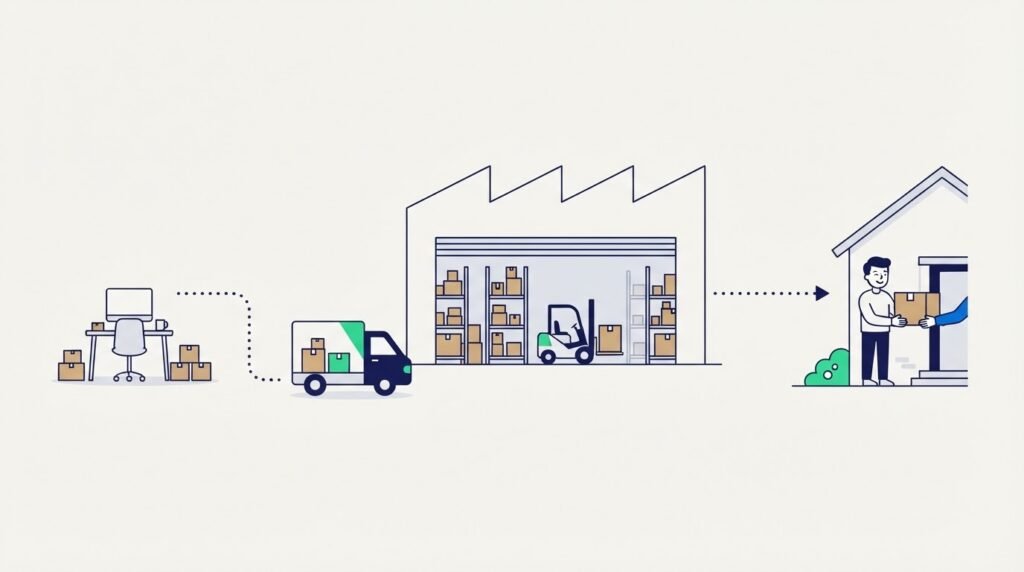
Why it hurts: Many beginners assume FBA is the only serious option. FBA works well for fast-moving, standard-size products, but slow sellers and bulky items can be cheaper to ship yourself through Fulfilled by Merchant (FBM). Ohio is well placed for this: JobsOhio’s logistics and distribution overview notes that the state sits within a day’s drive of about 60% of U.S. and Canadian customers and has the nation’s fifth-largest interstate highway system.
What to watch out for: FBM only works if you can ship reliably and on time. Late shipments hurt your account metrics, so be honest about your capacity during busy weeks.
First step: Compare FBA and FBM costs for each product in the Revenue Calculator. Many Ohio sellers end up with a hybrid: FBA for best sellers, FBM for slow or oversize items.
6. Launching a Brand Without a Trademark Plan
Why it hurts: If you sell your own private label product, Amazon Brand Registry unlocks tools like A+ Content, a Brand Store and stronger protection against copycats. As Amazon’s Brand Registry eligibility guide explains, you need an active registered trademark or a pending application from an approved government IP office, and your brand name must be permanently affixed to the product or packaging. Stickers and labels added later do not count.
What to watch out for: Choosing a brand name that someone else already uses. Rebranding after launch means new packaging and lost review momentum.
First step: Search the brand name before ordering packaging, and decide early whether you will file a trademark yourself, through an attorney or through Amazon IP Accelerator.
7. Buying Restricted Products Before Checking Approval
Why it hurts: Some categories, brands and products require Amazon’s approval before you can list them. Beginners sometimes buy inventory first, then discover they cannot sell it. Others list items that use another company’s brand name in the title and get listings removed after intellectual property complaints.
What to watch out for: Products that touch health, food, children, electronics or well-known brands deserve extra checking.
First step: Search the exact product in Seller Central’s “Add a product” tool and confirm you are allowed to list it before you pay a supplier.
8. Publishing Weak Listings
Why it hurts: Your listing is your storefront, salesperson and packaging all at once. Blurry photos, vague titles and bullet points that list features without benefits lower your conversion rate, which makes every advertising dollar less effective.
What to watch out for: Keyword stuffing. A title crammed with search terms can look spammy to shoppers. Also remember that enhanced content like A+ Content is only available to brands enrolled in Brand Registry.
First step: Invest in clear product photos (a white-background main image plus lifestyle and size-reference images), write bullets that answer real buyer questions, and review your listing on a phone screen, where many shoppers will see it.
9. Running Ads Without a Break-Even Number
Why it hurts: Sponsored ads (available on the Professional plan) can speed up a launch, but without a target it is easy to buy sales that lose money. Your break-even advertising cost of sale (ACoS) equals your profit margin before ad spend.
Illustrative example (not real seller data): If a product sells for $30 and leaves $9 after product cost, referral fee and fulfillment, your margin before ads is 30%. An ACoS above 30% means each ad-driven sale loses money. During launch you might accept that for a short, planned period, but it should be a decision, not a surprise.
First step: Calculate break-even ACoS for every product, set a launch budget and end date, and review search term reports weekly to cut wasted spend.
10. Relying on Amazon as Your Only Channel
Why it hurts: Amazon gives you access to a huge customer base, but you don’t own the customer relationship, and a listing suspension or policy change can pause your income overnight. Many sellers eventually add a direct website or a second marketplace. Our Shopify vs Amazon comparison walks through how the two channels differ in costs and control.
What to watch out for: Adding a direct channel changes your Ohio tax duties, because Amazon only collects tax on orders placed through Amazon. See the compliance section below.
First step: Build on Amazon first, but keep your brand assets (photos, product copy, brand name) in a form you can reuse elsewhere. If you would like a second opinion on your product, fees or launch plan before you order inventory, you can book a 30-minute call with our team.
Summary Table: 10 Mistakes at a Glance
| # | Mistake | Why it hurts | First fix |
|---|---|---|---|
| 1 | Skipping the fee math | Referral, plan and FBA fees erase thin margins | Run the Revenue Calculator before ordering |
| 2 | Bulky first product | Higher fulfillment, storage and return costs | Start small, light and durable |
| 3 | Local seasonal bias | Ohio winter demand isn’t national demand | Check 12 months of national data |
| 4 | Q4 overstocking | Higher Oct–Dec storage and aged inventory risk | Ship smaller batches more often |
| 5 | FBA for everything | Slow or oversize items can cost more in FBA | Compare FBA vs FBM per product |
| 6 | No trademark plan | No Brand Registry tools or protection | Clear and file your brand name early |
| 7 | Restricted products | Inventory you can’t list | Check listing approval first |
| 8 | Weak listings | Low conversion wastes ad spend | Better photos and buyer-focused bullets |
| 9 | Ads without a target | Sales that lose money | Set break-even ACoS and a budget |
| 10 | Amazon-only business | One suspension can stop all income | Reusable brand assets, second channel later |
Ohio Compliance Basics for Amazon Sellers
Business entity: You can start as a sole proprietor, but many sellers form an LLC to separate business and personal finances. The Ohio Secretary of State filing fee schedule lists a $99 fee to file Articles of Organization for a domestic LLC online through Ohio Business Central.
Sales tax: Amazon acts as a marketplace facilitator in Ohio, so it collects and remits sales tax on orders placed through Amazon. According to the Ohio Department of Taxation’s vendor’s license page, marketplace sellers don’t have to collect tax on those sales while the facilitator is collecting for them. If you also sell directly, for example through your own website or at Ohio markets and events, you will generally need a vendor’s license and must collect tax on those direct sales.
Commercial Activity Tax (CAT): Ohio has no corporate franchise tax, but it has the CAT, a gross receipts tax. Since 2025, businesses with $6 million or less in taxable gross receipts per year are excluded, which covers most new sellers.
For advice on your own situation, speak with an Ohio CPA or tax professional.
FAQ
Do I need an LLC to sell on Amazon in Ohio?
No. Amazon lets individuals and sole proprietors sell. An LLC is optional, but it helps keep business and personal finances separate. Filing Articles of Organization in Ohio costs $99.
Does Amazon collect Ohio sales tax for me?
Yes, for orders placed through Amazon. As a marketplace facilitator, Amazon collects and remits Ohio sales tax on those sales. Sales you make outside Amazon are your responsibility.
Do Ohio Amazon sellers need a vendor’s license?
Not if every sale goes through a marketplace that collects the tax. Once you sell directly to Ohio customers, such as through your own online store or in person, you will generally need a vendor’s license from the Ohio Department of Taxation.
Does Ohio’s Commercial Activity Tax apply to small Amazon sellers?
Usually not. Since 2025, the first $6 million of taxable gross receipts each year is excluded, so most new sellers fall below the threshold. Check with a tax professional as your sales grow.
Should an Ohio seller use FBA or FBM?
It depends on the product. FBA suits fast-moving, standard-size items. FBM can be cheaper for slow sellers and bulky goods, and Ohio’s central location helps with fast ground shipping. Many sellers use both.
Do I need a trademark to sell on Amazon?
Not to list products, but you do need a registered or pending trademark to enroll in Amazon Brand Registry, which unlocks brand tools and protection.
Final Thoughts
Selling on Amazon from Ohio has real advantages: a central location, a low LLC filing fee and clear marketplace tax rules. The sellers who struggle usually skip the boring checks: fees, product size, approvals, inventory timing and ad math. Work through the 10 mistakes above before you place your first order, and you will start with a business that can grow instead of one that needs rescuing.
If you want hands-on help, our Amazon micro private label service covers product research, launch and management on a profit-share model. You can also learn about our founder, Mohammad Sharfuddin, browse more guides on the Msharf blog, or reach us through our contact page.
Looking to build or scale your Amazon, Walmart, or Shopify business? Msharf can help you develop and manage your e-commerce business. Book a consultation with our team.
Information in this guide is based on official sources as of November 2026 and can change. Always confirm current fees and rules with Amazon and the State of Ohio before making decisions.