If you are weighing Shopify vs Amazon for Pennsylvania sellers, you are really choosing between two business models. Shopify gives you your own online store that you control, but you have to bring the shoppers. Amazon gives you shoppers who are already searching, but you play by Amazon’s rules and pay a share of every sale. Pennsylvania adds a twist that many comparison guides skip: who collects sales tax, how the clothing exemption works and how Philadelphia and Allegheny County taxes apply to your direct orders. This guide compares both platforms on fees, control, fulfillment and tax, then gives a clear verdict by seller situation.
Quick Answer
Choose Amazon first if you have a product but no audience: Amazon brings the traffic, can ship for you through FBA, and collects Pennsylvania sales tax on your marketplace orders. Choose Shopify first if you already have customers, a local following in Philadelphia, Pittsburgh or elsewhere, or a brand you want to own: payment fees are lower per sale, but you handle marketing and you collect and file Pennsylvania sales tax yourself. Many growing Pennsylvania businesses end up using both, with Shopify as the home base and Amazon as an extra sales channel.
In this guide
- Shopify and Amazon in one minute
- Side-by-side comparison
- Fees and costs compared
- Fulfillment and shipping from Pennsylvania
- Pros and cons
- Pennsylvania sales tax: where the two differ most
- Which one should you choose?
- Verdict
- FAQ
Shopify and Amazon in One Minute
Shopify: your own store
Shopify is software for building and running your own online store on your own domain. You choose the design, set the prices, own the customer list and decide how orders are shipped. Shopify also supports in-person sales with a phone or card reader, which matters if you sell at Pennsylvania farmers markets, pop-ups or a storefront. The trade-off is that nobody finds your store by default. Traffic comes from your marketing: search, social media, email, ads and word of mouth.
Amazon: a marketplace with built-in shoppers
On Amazon you list products inside Amazon’s store, next to other sellers. Shoppers are already there and searching, so a good listing at a competitive price can sell without your own audience. In return, Amazon charges a referral fee on each sale, controls the shopping experience and sets the policies you must follow. With Fulfillment by Amazon (FBA), you send inventory to Amazon and it stores, ships and handles returns for those orders.
Side-by-Side Comparison
| Factor | Shopify | Amazon |
|---|---|---|
| What you get | Your own branded store and checkout | Listings inside Amazon’s marketplace |
| Where customers come from | Your marketing (search, social, email, ads) | Amazon’s existing shoppers, plus Amazon Ads if you choose |
| Monthly cost | Plans from $29/month billed yearly ($39 billed monthly) | Professional plan $39.99/month, or Individual at $0.99 per item sold |
| Per-sale cost | Card processing, from 2.9% + 30¢ online on Basic | Referral fee by category (often 15%), plus FBA fees if used |
| Customer data and branding | You own the customer relationship | Amazon owns the customer relationship |
| Fulfillment | You ship, use a 3PL, or connect a fulfillment app | FBA or ship yourself (FBM) |
| Pennsylvania sales tax on online orders | You collect and file with a free state license | Amazon collects and remits on marketplace orders |
| Best fit | Brands, repeat customers, local businesses going online | New sellers with a product and no audience yet |
Fees and Costs Compared
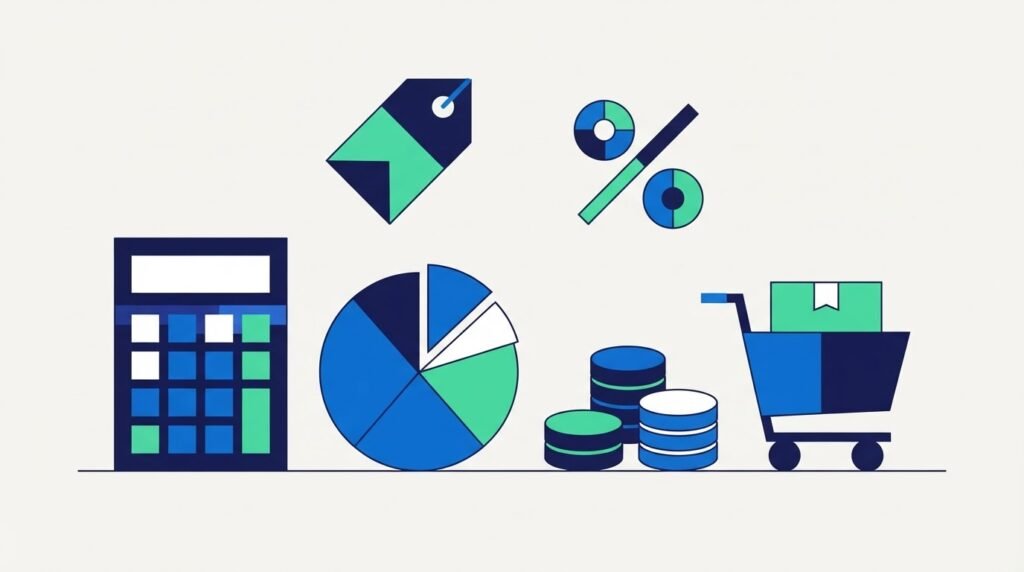
The two platforms charge in very different ways. Shopify is mostly a subscription plus payment processing. According to Shopify’s current plan pricing, Basic costs $29 per month billed yearly or $39 billed monthly, Grow costs $79 yearly or $105 monthly, and Advanced costs $299 yearly or $399 monthly. Online card rates with Shopify Payments start at 2.9% + 30¢ on Basic and drop to 2.7% + 30¢ on Grow and 2.5% + 30¢ on Advanced. If you use a third-party payment provider instead, Shopify adds a transaction fee of 2%, 1% or 0.6% depending on the plan. New stores are currently offered 3 days free, then $1 per month for 3 months.
Amazon is a smaller monthly fee plus a larger per-sale fee. Amazon’s standard selling fees page lists the Professional plan at $39.99 per month and the Individual plan at $0.99 per item sold. Referral fees depend on the category, with a $0.30 minimum in most categories. Home and Kitchen, Toys and Games, Pet Supplies and many others are 15%, while Clothing and Accessories uses tiers of 5%, 10% or 17% depending on price. FBA fees are separate and depend on size and weight. Amazon also advertises credits and fee incentives for new-to-Amazon sellers, so check the current terms when you register.
| Cost item | Shopify (Basic) | Amazon (Professional) |
|---|---|---|
| Monthly plan | $29 (yearly) or $39 (monthly) | $39.99 |
| Online payment processing | 2.9% + 30¢ per order with Shopify Payments | Included in Amazon’s fees |
| Commission on each sale | None (2% if using a third-party payment provider) | Referral fee by category, often 15% |
| Fulfillment | Your shipping costs; discounted labels available | FBA fees by size and weight, or your own shipping |
| Getting traffic | Your marketing budget | Optional Amazon Ads |
| Pennsylvania LLC (optional) | $125 once, $7 annual report | $125 once, $7 annual report |
Worked example: one $40 order
Illustrative numbers only, not real results. Say a Harrisburg seller sells a $40 kitchen item. On Shopify Basic with Shopify Payments, the card fee is 2.9% of $40 plus 30¢, or $1.46. On Amazon in Home and Kitchen, the 15% referral fee is $6.00, before any FBA fee. Shopify looks cheaper per order, but that ignores the cost of getting the visitor. If it takes $5 of ads to win that Shopify sale, the gap closes quickly. Amazon’s fee buys access to shoppers; Shopify’s lower fee assumes you can attract them yourself.
Fulfillment and Shipping from Pennsylvania
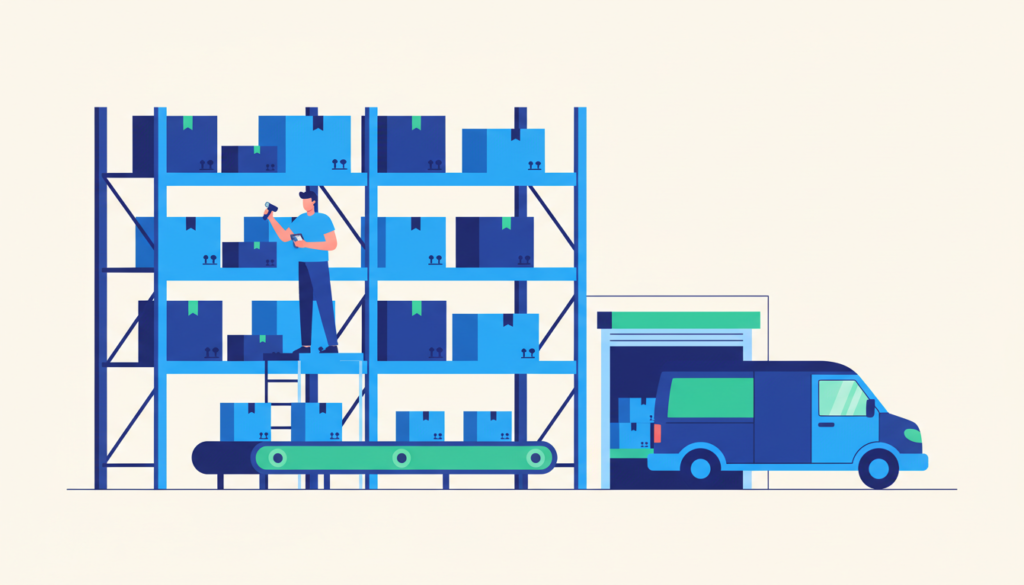
With Amazon, FBA is the big convenience. You ship inventory to Amazon, and it handles storage, delivery, customer service and returns for those orders. That suits a seller working from a small apartment in Philadelphia or a home office in the suburbs who has no space for stock. You can also fulfill Amazon orders yourself, which can make sense for bulky items where FBA fees climb.
With Shopify, fulfillment is yours to organize. You can pack orders yourself, buy and print shipping labels inside Shopify (its pricing page advertises discounts of up to 87% off shipping), or hand storage and packing to a third-party logistics company. For a Pennsylvania business with a shop, workshop or garage, shipping its own orders keeps control of packaging and the unboxing experience, which is part of building a brand.
You do not have to pick only one. Shopify’s own app can push your catalog to Amazon: Shopify’s Marketplace Connect help article explains that it syncs listings, orders and inventory with Amazon, Walmart (U.S. only), Target Plus and eBay from your Shopify admin. Shopify’s plan comparison lists the first 50 synced marketplace orders each month as free, then 1% of order value up to $99 per month.
Pros and Cons
Shopify
- Pro: You own your brand, store design and customer list, so you can email past buyers and build repeat sales.
- Pro: No commission on each sale when you use Shopify Payments; costs are predictable as you grow.
- Pro: One system for online and in-person sales, useful for Pennsylvania markets, events and storefronts.
- Con: You must generate your own traffic, which takes time, skill or ad budget.
- Con: You are responsible for Pennsylvania sales tax registration, collection and filing on your orders.
Amazon
- Pro: Built-in demand from shoppers already searching for products.
- Pro: FBA can handle storage, shipping and returns, so you can sell without warehouse space.
- Pro: Amazon collects and remits Pennsylvania sales tax on marketplace orders.
- Con: Referral fees take a larger share of each sale, and FBA fees come on top.
- Con: Strong competition on the same search results, and Amazon’s policies can change how you sell.
Pennsylvania Sales Tax: Where the Two Differ Most
Pennsylvania’s sales tax is 6%, with an extra 1% in Allegheny County and 2% in Philadelphia, as Pennsylvania’s official sales tax page explains. Most clothing is exempt, which is good news for apparel sellers on either platform. The state’s retail tax license is issued through the myPATH system.
Here is the key difference. Pennsylvania requires marketplace facilitators such as Amazon to collect and remit sales tax on the sales they facilitate, so you do not file for your Amazon orders. On Shopify, you are the seller of record: a Pennsylvania-based store needs the license and must collect, report and remit tax on taxable orders. Since Act 21 of 2026, the Philadelphia and Allegheny County local taxes follow the delivery address, so set up your Shopify tax settings by destination. Forming an LLC costs $125 plus a $7 annual report. Our Pennsylvania sales tax and LLC guide for online sellers covers each filing step by step.
Which One Should You Choose?
| Your situation | Start with | Why |
|---|---|---|
| You have a product idea but no audience or email list | Amazon | Existing shopper demand; FBA removes storage and shipping work |
| You run a Pennsylvania shop, studio, farm or food business with loyal local customers | Shopify | One system for in-person and online sales, and you keep the customer relationship |
| You are building a brand with repeat buyers (beauty, apparel, specialty food, gifts) | Shopify, then add Amazon | Own the brand and data first, use Amazon for extra reach |
| You want the simplest sales tax setup | Amazon | Amazon handles Pennsylvania sales tax on marketplace orders |
| You sell bulky or low-margin items | Compare carefully | Amazon’s referral and FBA fees can erase thin margins; run the numbers on both |
| You already sell well on one channel | Both | Marketplace Connect can sync your Shopify catalog to Amazon |
If you want a marketplace business without building everything alone, our Amazon micro private label service starts from $500 on a 70/30 profit share. If you want your own store, our team handles Shopify store design, development and management. Still undecided? Book a 30-minute consultation and we will compare both options against your product and budget.
Verdict
For most first-time Pennsylvania sellers with no audience, Amazon is the faster path to a first sale and the simpler path on sales tax. For Pennsylvania businesses that already have customers, a local reputation or a brand they want to own, Shopify is the stronger long-term base, with lower per-sale costs and full control. The best answer for many sellers is a sequence rather than a choice: start where your customers already are, then add the other channel once the first one is working.
FAQ
Is Shopify or Amazon cheaper for a Pennsylvania seller?
Per order, Shopify is usually cheaper because there is no referral fee when you use Shopify Payments. Overall, it depends on your marketing costs. Amazon’s higher fees include access to its shoppers, while Shopify sellers pay separately to attract visitors.
Do I need a Pennsylvania sales tax license to sell on Shopify?
If you are based in Pennsylvania and sell taxable products through your own Shopify store, yes. The license is issued through myPATH, and you collect, report and remit the tax yourself. Most clothing is exempt.
Does Amazon collect Pennsylvania sales tax for me?
Yes, for orders sold through Amazon. Pennsylvania treats Amazon as a marketplace facilitator that collects and remits sales tax on facilitated sales. Sales you make elsewhere, including on Shopify, are your responsibility.
Can I sell on both Shopify and Amazon at the same time?
Yes. Shopify’s Marketplace Connect app syncs products, orders and inventory with Amazon. The first 50 synced marketplace orders each month are free, then Shopify charges 1% of order value up to $99 per month.
Which is better for selling clothing from Pennsylvania?
Both work. Pennsylvania exempts most clothing from sales tax, which simplifies a Shopify store. On Amazon, clothing referral fees are tiered by price (5%, 10% or 17%), so check your price points before choosing.
Do I need an LLC for either platform?
No, but many sellers form one to separate business and personal finances. A Pennsylvania LLC costs $125 to form and $7 per year for the annual report.
Conclusion
Shopify vs Amazon is not about which platform is better in general. It is about where your customers are today and how much control you need. Amazon trades higher fees for built-in demand and simpler Pennsylvania sales tax. Shopify trades marketing work for ownership, lower per-sale costs and a direct relationship with your buyers. If you would like help deciding or setting up either channel, contact the Msharf team, or browse more state-by-state guides on the Msharf e-commerce blog.
Looking to build or scale your Amazon, Walmart, or Shopify business? Msharf can help you develop and manage your e-commerce business. Book a consultation with our team.
Information in this guide is based on official sources, including Shopify, Amazon and the Pennsylvania Department of Revenue, as of November 2026, and can change. It is general information, not legal or tax advice.
1 comment