Starting an Amazon FBA business in Georgia is less about paperwork and more about decisions: which product to sell, where to source it, how to price it so fees don’t eat the margin, and how to get inventory into Amazon’s warehouses without wasting money. This guide walks Georgia beginners through each of those steps in order, from the first product idea to a second and third product. It also covers the short list of Georgia filings and tax rules you need to know, so nothing surprises you after launch.
If you would rather have an experienced team build the business with you, see how our Amazon micro private label service works. Otherwise, read on and build it step by step.
Quick Answer
To build an Amazon FBA business from Georgia, validate one product with real demand data, get landed-cost quotes from suppliers, check the numbers with Amazon’s fees, build a simple brand and strong listing, open a Professional seller account, and ship inventory to Amazon fulfillment centers. An LLC is optional but common; a Georgia LLC costs $110 to form and $60 a year to keep active. Amazon collects and remits Georgia sales tax on the orders it facilitates.
In this guide
- Why Georgia is a practical base for FBA
- Step 1: Find a product worth selling
- Step 2: Source inventory and check your margins
- Step 3: Build a brand and a listing that converts
- Step 4: Set up your seller account
- Step 5: Get inventory into FBA
- Step 6: Launch and market your first product
- Startup budget for a Georgia FBA business
- Georgia LLC and sales tax basics
- Scaling past your first product
- Common mistakes and practical tips
- FAQ
Why Georgia Is a Practical Base for FBA
With FBA, Amazon stores, packs and ships your orders, so your customers can be anywhere in the country. Where you live still matters for one thing: how your inventory moves before it reaches Amazon. Georgia sellers have an advantage here because many first-time private label products are imported in shipping containers.
The Georgia Ports Authority describes the Port of Savannah as the single largest container terminal in America, with immediate access to I-95 and I-16 and two Class I railroads on the terminal. According to the Georgia Ports Authority’s Port of Savannah page, the port is closest and fastest by rail to Atlanta, Birmingham, Charlotte, Memphis and Orlando. For you, that means freight forwarders, customs brokers, warehouses and trucking companies that handle import cargo are already concentrated in the state, which makes it easier to compare quotes and inspect inventory before it ships to Amazon.
Georgia also gives you two very different local test markets: the large Atlanta metro area and the smaller coastal and rural communities. You won’t sell to them directly through FBA, but they are useful for informal product feedback, photo shoots and finding local manufacturers or packaging suppliers.
Step 1: Find a Product Worth Selling
Product choice decides most of your results, so spend the most time here. Start with Amazon’s own data instead of guesses. Amazon’s Product Opportunity Explorer sits inside Seller Central under Growth. It groups search terms into “niches” and shows demand and purchasing trends, competition, search volume, customer reviews and return activity. Amazon states clearly that the tool is a guide and does not guarantee results, so treat it as a starting point.
Use these filters when you shortlist ideas:
- Small and light: smaller items generally cost less to ship, store and fulfill, which protects your margin.
- Not fragile or regulated: avoid glass, batteries, supplements and anything that needs category approval for your first product.
- Clear complaints in reviews: if buyers keep mentioning the same flaw in competing products, you have a concrete way to improve.
- Steady, not purely seasonal demand: a product that sells all year is easier to manage than one that sells only for a few weeks.
- Room for a brand: generic commodity items invite price wars; products where design, bundling or packaging matter give you room to stand out.
Shortlist three to five niches, read the one- to three-star reviews of the top listings in each, and write down what you would change. That list becomes your product specification for suppliers.
Step 2: Source Inventory and Check Your Margins
Ask at least three suppliers for quotes on the same specification, and always request a sample before you order. Compare the landed cost: the unit price plus packaging, freight, duties, customs brokerage and delivery to Amazon. A cheap unit price can turn expensive once freight and duties are added.
Then check the Amazon side. Referral fees depend on the category: for example, Home and Kitchen is 15% with a $0.30 minimum, and Beauty, Health and Personal Care is 8% at $10 or less and 15% above $10, according to Amazon’s standard selling fees page. FBA fulfillment fees depend on size and weight, so run your exact product through Amazon’s Revenue Calculator before you order.
Here is how to lay out the math. The referral rate is Amazon’s published Home and Kitchen rate; every other number is an illustrative placeholder, not a real quote or average.
| Line item (illustrative) | Per unit | Where the number comes from |
|---|---|---|
| Selling price | $25.00 | Your pricing decision |
| Referral fee (15%) | −$3.75 | Amazon’s Home and Kitchen rate |
| FBA fulfillment fee | −$5.50 | Placeholder: use the Revenue Calculator |
| Landed product cost | −$6.00 | Placeholder: your supplier and freight quotes |
| Advertising per unit | −$3.00 | Placeholder: your launch ad budget ÷ units sold |
| Profit before storage, returns and overhead | $6.75 | Must still cover storage, returns and your monthly plan |
If the result is thin with these generous assumptions, pick another product. It is far cheaper to drop an idea on paper than after the first container lands.
Step 3: Build a Brand and a Listing That Converts
A brand does not need to be expensive. You need a short, memorable name, a simple logo printed on the product or packaging, and a trademark application. Amazon Brand Registry is free, and it requires a logo with your brand name on the product or packaging plus a pending or registered trademark. Brand Registry unlocks A+ Content, Brand Stores, Sponsored Brands ads and brand-protection tools. Amazon also currently advertises 10% back on the first $50,000 in branded sales for newly enrolled brands, then 5% back through the first year up to $1,000,000; check the current terms in Seller Central before you count on it.
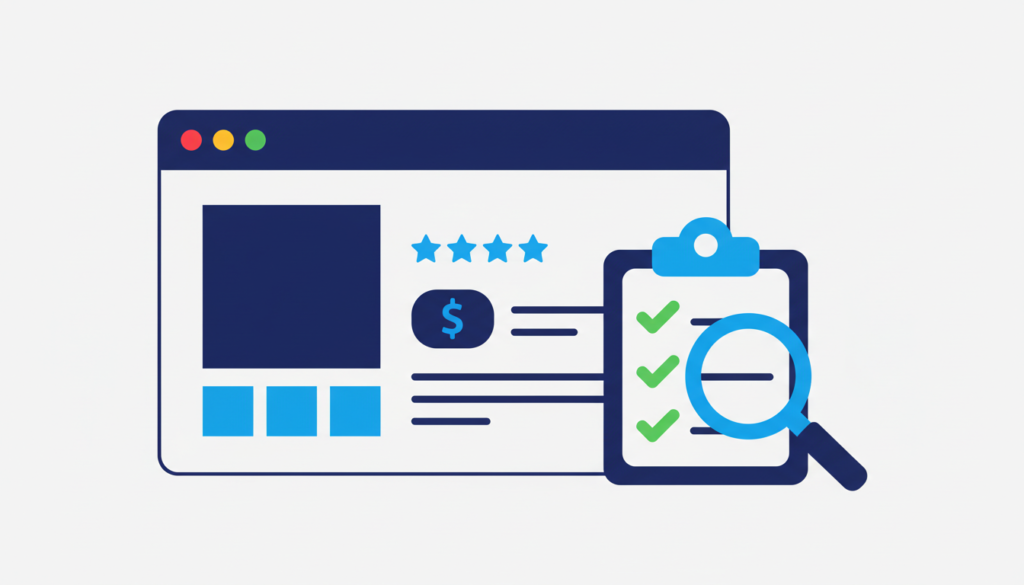
Your listing is your storefront. Focus on:
- Title: brand, product type, key feature and size or quantity, written for people first.
- Images: a clean main image, then lifestyle, scale, close-up and “what’s in the box” photos. Georgia has plenty of photographers in Atlanta, Savannah and Augusta, so you can direct the shoot in person.
- Bullets: one benefit per bullet, and directly address the complaints you found in competitor reviews.
- Keywords: use the search terms from your research naturally; don’t stuff them.
Step 4: Set Up Your Seller Account
Amazon offers two selling plans. For a brand you plan to grow, the Professional plan is usually the right choice because advertising and brand tools require it.
| Feature | Individual plan | Professional plan |
|---|---|---|
| Plan fee | $0.99 per item sold | $39.99 per month |
| Can use FBA | Yes | Yes |
| Amazon Ads | No | Yes |
| Brand-building tools | No | Yes (with Brand Registry) |
| Bulk listing and inventory tools | No | Yes |
| Best for | Testing a few items | Private label brands |
Prepare a government ID, a bank account, a credit card and your business details before you register. If you form an LLC first, register the seller account in the LLC’s name so your banking and tax records stay consistent.
Step 5: Get Inventory into FBA
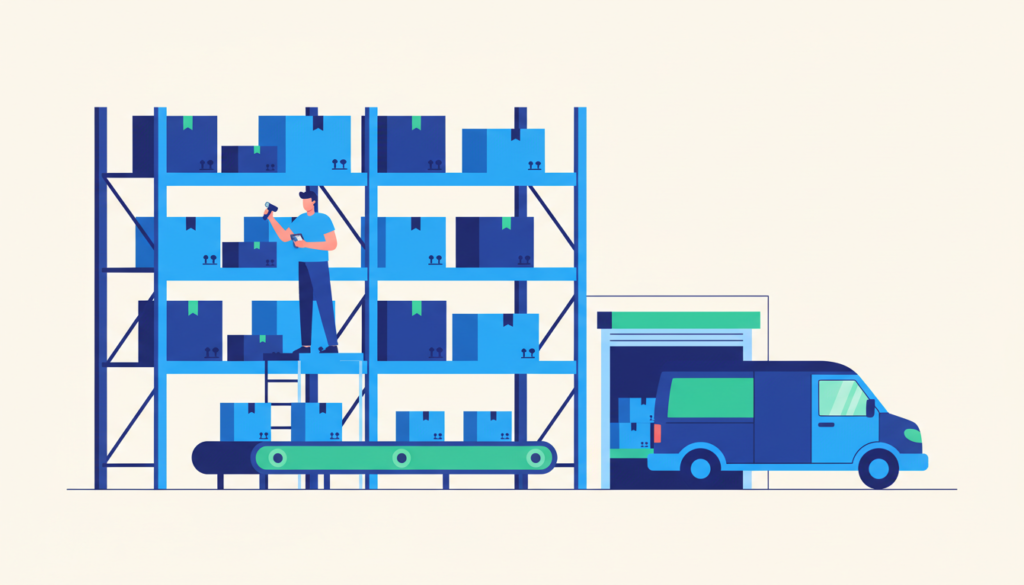
For imported goods, a common route for Georgia sellers is: supplier → ocean freight → Port of Savannah → customs clearance → a prep or third-party warehouse → Amazon fulfillment centers. Keeping a buffer of stock in a Georgia warehouse lets you check quality, fix labeling and send smaller replenishment shipments instead of storing everything with Amazon.
- Create the shipment in Seller Central and follow Amazon’s labeling and packaging requirements exactly.
- Inspect a sample of units yourself or through your prep warehouse before they ship.
- Send a modest first batch, then reorder based on real sales speed.
For a step-by-step look at account setup and inbound shipments from another Southeast state, see our Amazon FBA setup guide for Florida sellers; the shipment workflow is the same.
Step 6: Launch and Market Your First Product
New listings have no sales history, so the first weeks are about getting visibility and early reviews the right way.
- Run Sponsored Products ads on your main keywords with a fixed daily budget, and check search term reports weekly.
- Price competitively at launch, then adjust once reviews and ranking build.
- Use Amazon Vine (a Brand Registry program) for early, legitimate reviews. Never offer incentives for reviews outside Amazon’s programs.
- Bring outside traffic from social media or a simple email list; Brand Registry tools let you measure it.
Startup Budget for a Georgia FBA Business
Fixed fees below are official figures. Variable costs depend entirely on your product, so fill those in with your own quotes rather than relying on averages from the internet.
| Cost | Amount | Type |
|---|---|---|
| Georgia LLC formation (optional) | $110 ($100 fee + $10 service charge) | One-time, official |
| Georgia annual registration | $60 per year, from the year after formation | Recurring, official |
| Amazon Professional plan | $39.99 per month | Recurring, official |
| Referral fees | Percentage of each sale, by category | Per sale, official |
| FBA fulfillment and storage | Depends on size, weight and season | Per unit; use Revenue Calculator |
| Inventory, samples and freight | Your supplier and forwarder quotes | Variable |
| Trademark, logo, photos | Your quotes | Mostly one-time |
| Launch advertising | Your fixed test budget | Variable |
Not sure your numbers add up? Book a free 30-minute call with our team and we will review your product idea and budget with you.
Georgia LLC and Sales Tax Basics
An LLC is not required to sell on Amazon, but many sellers form one to separate business and personal finances. A Georgia LLC costs $110 to file online or by mail and needs a registered agent located in Georgia. Every LLC must then file an annual registration between January 1 and April 1, starting the year after it was formed, for $60. The details are on the Georgia Secretary of State’s LLC registration guide.
For sales tax, Georgia treats a marketplace as a “dealer” once its Georgia sales reach $100,000 in the current or previous year, so a marketplace the size of Amazon collects and remits Georgia state and local sales tax on the orders it facilitates. The Department of Revenue’s policy bulletin adds that sellers are not required to collect tax on those facilitated sales. See the Georgia Department of Revenue’s marketplace facilitator page. If you also sell through your own website or in person, you may need your own sales tax registration, so check with a tax professional. Your city or county may also require a local business license.
Scaling Past Your First Product
Once the first product sells steadily and stays profitable, grow carefully:
- Add variations or complementary products that the same customer would buy, so your brand and reviews work harder.
- Reorder on data: track units sold per week, supplier lead time and transit time so you never run out of stock.
- Build your own channel: a branded website gives you customer data that Amazon does not. Our Shopify store design and management service can help when you’re ready.
- Systemize: document your listing, ordering and shipping steps so you can hand them off later.
Common Mistakes and Practical Tips
- Ordering too much inventory first. Start with a test quantity and reorder once you see real sales.
- Ignoring landed cost. Freight, duties and prep can change your margin more than the unit price does.
- Skipping the trademark. Without one you can’t enroll in Brand Registry or use its tools.
- Missing the April 1 annual registration. Georgia can administratively dissolve an LLC that doesn’t file, which can disrupt your bank and Amazon account details.
- Chasing trends without data. Verify demand in Amazon’s tools rather than social media hype.
For a longer list of pitfalls, read our guide to 10 Amazon seller mistakes to avoid; almost all of them apply to Georgia sellers too.
FAQ
Do I need an LLC to start an Amazon FBA business in Georgia?
No. Amazon lets both individuals and businesses sell. An LLC is a common choice for separating finances and limiting personal liability, and in Georgia it costs $110 to form plus $60 a year for the annual registration.
Does Amazon collect Georgia sales tax for me?
Yes, for orders Amazon facilitates and ships to Georgia addresses. Under Georgia’s marketplace facilitator rules, the marketplace collects and remits that tax. Sales you make outside Amazon are your responsibility.
How much money do I need to start?
The fixed costs are small: $39.99 a month for the Professional plan and $110 if you form an LLC. Inventory, freight, branding and advertising make up most of the budget, and they depend on your product, so build your budget from real supplier quotes.
Should I use FBA or ship orders myself?
FBA suits most beginners because Amazon handles storage, shipping, returns and customer service. Shipping yourself (FBM) can make sense for bulky or slow-moving items. Compare both in Amazon’s Revenue Calculator for your specific product.
How long does it take to form a Georgia LLC?
The Secretary of State says online filings are generally processed in about seven business days. You can pay an extra $120 for two-business-day processing.
Can I run an Amazon FBA business from home in Georgia?
Yes. Because Amazon stores and ships your inventory, many sellers work from home. Check with your city or county about local business license or home-occupation rules before you start.
Conclusion
A successful Amazon FBA business in Georgia comes down to a validated product, honest margin math, a brand that can grow and a smooth path from supplier to Amazon’s warehouses, which the Port of Savannah makes easier for Georgia sellers. Keep the state paperwork simple, track your numbers weekly and add products only when the first one works. If you have questions about your plan, contact the Msharf team.
Looking to build or scale your Amazon, Walmart, or Shopify business? Msharf can help you develop and manage your e-commerce business. Book a consultation with our team.
Information in this guide is based on official sources as of November 2026 and can change. Always confirm current fees and rules with Amazon, the Georgia Secretary of State and the Georgia Department of Revenue.